Dear U.S. Figure Skating,
I'd like to make an open appeal on behalf of figure skating bloggers who are both social media savvy and support U.S. Figure Skating.
When I began writing my blog five years ago, it was mainly a place for me to write my feelings about figure skating...an online diary if you will. I posted here and there and was proud I had a little corner on the Internet.
But as time has progressed and social media has advanced, my blog and the blogs of many of my social peers have gone from a simple diary on the net to a full blown resource for figure skating fans around the world. Over the last five years my blog has gone from a small audience to a large global audience.
I've gone from being a casual blogger to being very serious about my content. I understand that people are reading my blog for information, for insight, for perspective; and I take that very seriously. I take my blogging so seriously that Panasonic chose me to go to Vancouver and blog for them at the Olympic Games. While our amazing athletes including Evan Lysacek, Meryl Davis, and Charlie White were performing brilliantly, I was there blogging about them.
U.S. Figure Skating, I'd like to ask you to make a proactive step into the future of media and relax your media credential standards just slightly to allow for figure skating bloggers to cover your events, such as Skate America and U.S. Nationals. Absolutely bloggers should have to abide by the same rules and standards that other credentialed media are given and there should be strict qualifying standards for a blogger, but bloggers should be allowed none-the-less.
U.S. Figure Skating has a presence in online and social media but bloggers are, frankly, more in tune with the everyday online pulse of what's happening in the world of figure skating. Bloggers are using services such as YouTube, Twitter, and Facebook to not only provide content for fans of figure skating, but actually interact with those fans in near real time. And imagine all the online buzz you could create in the figure skating community by allowing bloggers to cover events as well. This is a win-win.
It's the 21st Century and there is a world of untapped media coverage at your fingertips. Will you take advantage of it?
Aaron
Axels, Loops, and Spins

Showing posts with label Blogosphere. Show all posts
Showing posts with label Blogosphere. Show all posts
Friday, October 01, 2010

Friday, April 30, 2010
The 2010 TIME 100: Kim Yu-Na
 By Michelle Kwan
I couldn't have been more surprised or honored last summer when Korean figure skater Kim Yu-Na told me that as a 7-year-old, she was so inspired by my skating at the 1998 Winter Games that she memorized my skating routines, pretending to be at the Olympics. Twelve years later, she no longer had to pretend. I have never seen a skater with such a combination of artistry and athleticism. From the first notes of her sassy James Bond medley to the closing Gershwin strains, Kim's inspiring performances in Vancouver changed the face of figure skating forever. Those 6½ minutes on the ice left not only a mark in the record book but also an indelible impression on millions of young girls around the world. For Kim, the dream that began as a 7-year-old has been realized. For these girls, thanks to her, a dream and journey are just beginning.
Kwan is the most decorated figure skater in U.S. history
Read more: http://www.time.com/time/specials/packages/article/0,28804,1984685_1984949_1985220,00.html#ixzz0mcWTgmgJ
Tuesday, April 20, 2010
Pic of the Week
 This Pic of the Week comes courtesy of Tim David, the creator, director, and producer of One Step Closer which was a figure skating exhibition to benefit the prevention and treatment of HIV/AIDS.
The picture is, of course, Angela Maxwell, on of the up and coming stars in U.S. Figure Skating. She performed in One Step Closer and here is a cool stro-motion look at her back flip.
I love Angela...she has a lot of spunk! Take a look at this interview Susan at Lifeskate did with Angela earlier in the season.
Tuesday, January 26, 2010
The Op Ed: Protocols, Protocols
 I sent out a Tweet during the European Championships: "I'm over the code of points judging system."
I followed that Tweet up with another: "6.0 Anyone?"
The second tweet was met with mixed response. I got everything from 'I'm with you' to 'Eeeek...not 6.0!'
I agree that the 6.0 system is full of inadequacies and issues. I also agree that the current code of points judging system is full of inadequacies and issues. We've got two apples and BOTH are kind of rotten.
Phil Hersh recently blogged about the ladies final in Spokane. While I'm not always his biggest fan he made some valuable points (no pun intended). Chiefly among them, he correctly pointed out that somewhere around two years ago the judges began to get ridiculous with using the system in a negative way. Phil Hersh wrote:
This time, the problem was the system, not the judging. And, as I have frequently noted in this Blog since the 2008 Skate America, it isn't as much a fault with the system itself as much as with the decision to use it negatively that took effect two seasons ago.
 The judging system is beginning to really work against the sport. At the recent U.S. Nationals, scores in the three of the four events came under attack because of this judging system and the protocols. In the Pairs event, Inoue and Baldwin slammed the judges on their protocols after landing a throw triple axel in the free yet getting the Olympic Team snub. In the Men's competition their was bickering about who should be ahead of who after the short, Johnny or Evan. The biggest fallout has been the ladies competition where Mirai Nagasu seemed to pull off an easy victory in the free skate only to find herself hanging on to second because of those tiny little downgrades that absolutely no one saw until the slow-mo rewind.
This isn't a problem contained to this event. There was bickering about protocols after Joubert lost the 2008 World's to Buttle who didn't do a quad. There was bickering about protocols at the Grand Prix Final this season with Kim Yu-Na's jump landings (and another added chapter of the mini war between Korea and Japan that we are all so sick of). At last season's European Championships, Carolina Kostner went as far as to appeal her silver medal on the belief that the protocols were wrong and she deserved the title, not Laura Lepisto.
Protocols, protocols, protocols...I'm sick of them! Anyone remember the days when you won a medal in competition, was happy about it, and had a parade down Main St. in your home town?
Now we pour over the protocols and find ways to complain about the judging and how the skater we 'thought' should have won or our favorite skater was wronged. It seems more and more often we aren't happy about the winner.
 Phil Hersh also correctly points out (I know, right...he was actually on point in this article) that Mirai Nagasu's loss made absolutely no sense to the majority of people watching the Ladies Final that night at home or in Spokane Arena. Sure us die-hard skating fans get it but that is NOT the majority of the people who are watching. Most tune in to see who lands the most jumps with a nice outfit, a little sparkle, and a little pizazz...and to the common public, that was Nagasu, not Flatt (can I just say, however, I love Rachael Flatt and I think she was also deserving of the title).
All I could think about Saturday was, "Wow...because Sasha Cohen is in the competition we have all these eyes on these girls who will represent us in Vancouver and we blew it once again with the judging system." So much for making skating appealing to the masses...
Maybe a return to the 6.0 (with some tweeks of course) wouldn't be such a bad idea...I think it would, at the very least, be better than this constant bickering over protocols. In the end we have to ask, is the Code of Points Judging System doing more harm than good?
Sunday, January 10, 2010
On Blogs and Twitter
Well known 'Twitterholic,' Stephen Fry (although he's taking a 'Tweet-break' to finish his novel), was recently on The Graham Norton Show. Amongst other things he talked about Twitter, blogs, the internet, etc.
He caught my attention when he talked about what he called the downside of social media...the comments.
Watch the clip below. It's a sobering reminder that it's okay to have an opinion...but don't be malicious and mean.
He caught my attention when he talked about what he called the downside of social media...the comments.
Watch the clip below. It's a sobering reminder that it's okay to have an opinion...but don't be malicious and mean.
Wednesday, November 18, 2009
Chance of a Lifetime!
 Blogging and Tweeting are two of my favorite things to do! And two of my social media compatriots have been given the chance of a lifetime...so naturally I'm going to shamelessly promote them!
Blogger Christie (owner of the blog: Lake Placid Skater), and Twitter user Sarah (@segsk8 and owner of the blog: blogher) are currently vying for the chance to blog for the U.S. at the Vancouver Winter Olympics.
Basically, that's awesome!
Here's the part I love the best. You can vote for BOTH of them! There are actually two teams...a Student's Team (Christie)and a Women's Team(Sarah)with the three highest vote getter's on each team going before the judges and if selected, winning a trip to Vancouver.
The judges are kind of amazing too! Jake Hurwitz and Amir Blumenfeld who co-founded www.collegehumor.com and the awesome Bonnie Blair, Five-Time Olympic Gold Medalist Speed Skater!
I said...where's the Men's Team? *Sighs*
 This awesome competition is being brought to you by the cool people at Microsoft® Office and you can vote now...just click here.
Also, if you are on Twitter...get out this message (Vote for @segsk8 and LP Skater to go to Vancouver! http://ow.ly/DpKa). Let's get these guys to Vancouver!!!
UPDATE: Looks like Christie has some more press...she's featured at the U.S. Figure Skating Website! Check it out here!
Tuesday, November 03, 2009
Words of Wisdom from Jennifer Kirk
 Jennifer Kirk wrote an Op-Ed at True/Slant that I think everyone must read. She managed to explain with such clarity why I'm having issues with the judging system.
You can read her blog post here.
Tuesday, May 05, 2009
Skate Canada I think will shoot themselves!
 Skate Canada, rather unintentionally I think, has created quite the PR Mess!
Believe it or not (I didn't even know it!), I can do true journalism! Check out my first 'big boy' story!
Skating ratings may get a boost as this plays out, but for all the wrong reasons!
Friday, April 10, 2009
Vancouver Woes...
 Arlene Miles gives a grim outlook on the U.S. prospects in Vancouver...
Don't Expect U.S. Figure Skaters to Perform Well at 2010 Olympics
Emergence of Asian competitors, lack of top US coaches affecting American chances and consistency
http://www.associatedcontent.comarticle/1635200/dont_expect_us_figure_skaters_to_perform.html
Wednesday, April 08, 2009
On the topic of comebacks...
 While we're discussing possible comebacks, a fellow blogger (E.M. Swift at Swift Takes...wonder if that's the same E.M. Swift that co-authored My Sergei?)posted an interesting story about Michelle Kwan and the rumored comeback.
I'm staying out of this fight! But if you care to put in your two cents worth...you can check it out here. Heated discussion indeed.
Memorable quote from the article..."Compared to the lithe, butterfly-like Kim, Kwan would look like George Foreman did at the end of his career. Kwan may be old in figure skating years, but she's not a punch-drunk numbskull. The only place you'll see her in Vancouver is in the television booth."
Thursday, February 12, 2009
Young Americans: Stage theirs for the taking
By John Henderson, The Denver Post
It's a year away from the Vancouver Olympics, and new American skating stars are emerging — most notably Jeremy Abbott and Brandon Mroz of Colorado Springs, who finished 1-2 in the men's competition at last month's nationals in Cleveland.
 They aren't exactly household names, but they could be. And they may need to be to help figure skating, which seems to have slipped in popularity.
"It has," acknowledges 1996 world champion Todd Eldredge, the last American man to win a world title, and a performer with Stars on Ice. "It has across the globe."
What does U.S. figure skating need?
"It needs a Jeremy Abbott, a Brandon Mroz," Eldredge said. "It needs a new, young, fresh face that not only can go out and be endearing to the audience but consistent and be a champion and do well and stay in."
For tonight at least, figure skating will come to Denver, with 1998 Olympic gold medalist Ilia Kulik and defending world champions Jeffrey Buttle and Yuka Sato headlining the Smucker's Stars on Ice exhibition at 7 p.m. at the Pepsi Center.
Kulik is from Russia, and Buttle is from Canada. The U.S. hasn't had an Olympic or world champion since Kimmie Meissner won the world championship after the 2006 Olympics.
America's last two Olympic champions, Tara Lipinski in 1998 and Sarah Hughes in 2002, never skated in another Olympics.
 Michelle Kwan, a five-time world champion, retired and Meissner has been hurt. Evan Lysacek and Johnny Weir, who combined to win the five previous national championships, are unlikely candidates, Eldredge said.
"They're so concerned with their own persona as opposed to the crowd, bringing in the crowd," Eldredge said. "When I watch them skate, they don't bring me into their performance. They need to do that."
Other skaters tonight include Sasha Cohen, America's 2006 Olympic silver medalist; Michael Weiss, three-time U.S. champion; John Zimmerman, three-time U.S. pairs champion; Jennifer Robinson, six-time Canadian champion; Xue Shen and Hongbo Zhao, China's three-time world pairs champions; and Marie-France Dubreuil and Patrice Lauzon, five-time Canadian dance champions.
See Also...Ohhhhh Snap
read more | digg story
It's a year away from the Vancouver Olympics, and new American skating stars are emerging — most notably Jeremy Abbott and Brandon Mroz of Colorado Springs, who finished 1-2 in the men's competition at last month's nationals in Cleveland.
 They aren't exactly household names, but they could be. And they may need to be to help figure skating, which seems to have slipped in popularity.
 "It has," acknowledges 1996 world champion Todd Eldredge, the last American man to win a world title, and a performer with Stars on Ice. "It has across the globe."
What does U.S. figure skating need?
"It needs a Jeremy Abbott, a Brandon Mroz," Eldredge said. "It needs a new, young, fresh face that not only can go out and be endearing to the audience but consistent and be a champion and do well and stay in."
For tonight at least, figure skating will come to Denver, with 1998 Olympic gold medalist Ilia Kulik and defending world champions Jeffrey Buttle and Yuka Sato headlining the Smucker's Stars on Ice exhibition at 7 p.m. at the Pepsi Center.
Kulik is from Russia, and Buttle is from Canada. The U.S. hasn't had an Olympic or world champion since Kimmie Meissner won the world championship after the 2006 Olympics.
America's last two Olympic champions, Tara Lipinski in 1998 and Sarah Hughes in 2002, never skated in another Olympics.
 Michelle Kwan, a five-time world champion, retired and Meissner has been hurt. Evan Lysacek and Johnny Weir, who combined to win the five previous national championships, are unlikely candidates, Eldredge said.
 "They're so concerned with their own persona as opposed to the crowd, bringing in the crowd," Eldredge said. "When I watch them skate, they don't bring me into their performance. They need to do that."
Other skaters tonight include Sasha Cohen, America's 2006 Olympic silver medalist; Michael Weiss, three-time U.S. champion; John Zimmerman, three-time U.S. pairs champion; Jennifer Robinson, six-time Canadian champion; Xue Shen and Hongbo Zhao, China's three-time world pairs champions; and Marie-France Dubreuil and Patrice Lauzon, five-time Canadian dance champions.
See Also...Ohhhhh Snap
read more | digg story
Monday, February 02, 2009
Wagner laying claim to Delaware's ice
From Delaware Online by Martin Frank
WILMINGTON -- For the past several years, figure skating in the state of Delaware has been about Johnny Weir and Kimmie Meissner.
Each won their share of honors, including national championships for both and a world championship for Meissner, and both earned spots on the U.S. team for the 2006 Winter Olympics.
Both have moved on over the past year or so, with Weir moving to northern New Jersey and Meissner heading to Florida.
But the cupboard, so to speak, is not bare. Ashley Wagner, a 17-year-old from Alexandria, Va., moved to Delaware last summer to train with Priscilla Hill, Weir's former coach, at the Skating Club of Wilmington.
She placed fourth at last month's U.S. Figure Skating Championships, and is headed to the World Junior Championships in Bulgaria beginning Feb. 23. And she is among several women skaters who have a chance to make the U.S. Olympic team next year.
"That is definitely the goal," Wagner said. "I'm willing to do whatever it takes to get there. But it's also scary because all my life, it seemed so far in the distance. Now it's only a year away."
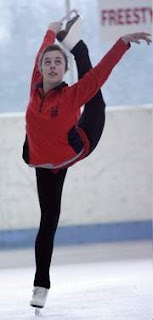 Wagner has done a lot to fulfill her goal. Wagner, her mother Melissa and younger brother Austin, who finished fifth in the novice competition, rented an apartment in Brandywine Hundred last summer so Wagner could train with Hill. She had left her longtime coach Shirley Hughes earlier in the summer.
Wagner takes online classes from her high school in Virginia, where she's a senior maintaining honor-level grades.
The Wagners head back to Virginia each weekend, where Wagner's father, Eric, lives.
Traveling long distances, however, is nothing new for Wagner. She's the daughter of a career military man. She was born in Germany and has moved nine times, including stints in Alaska, California, Washington, Kansas and Virginia.
She began skating at the age of 5 in Alaska, and was hooked a few years later when she watched former University of Delaware skater Tara Lipinski win the Olympic gold medal in 1998. In fact, her father chose an assignment in Kansas over Hawaii so she could continue skating.
"There weren't too many places to skate in Hawaii," Wagner said with a laugh.
Wagner trains about five hours a day during the week, then takes Pilates after her daily skating sessions.
It is during training where Hill sees the similarities with Weir, whom she coached for several years.
"When Johnny was at his best he was training non-stop, and I see that with Ashley," Hill said. "You see that with every elite athlete. That energy is so unbelievable and Ashley definitely has that."
The similarities end there, however.
Weir was, and is, known for his eccentricities and his outrageous comments, which have on occasion gotten him in trouble with the U.S. Figure Skating Association.
Wagner, meanwhile, just skates.
She showed her mental fortitude at the national championships, when she was 12th after the short program.
"It was a disaster," said Wagner, who had finished third the year before and was considered one of the favorites to medal this year. "I was a little shocked. I was going for a triple-triple, and when it didn't happen, I lost my focus for the rest of the program."
Wagner recovered to win the long program, which shot her all the way up to fourth. While it wasn't good enough to get a spot on the podium or the World Championship team, it did get her a spot on the World Junior team and gave her a tremendous boost of confidence.
 "It showed me that when things are at the ultimate low point, I can pull myself out of it," Wagner said. "Granted, I never want to have to pull myself up like that again, but at least I know I can do it."
Added Hill: "She learned a lot about herself between the short and the long program. She learned to overcome her demons. In the long term, having to build back was very important to her, even more than if she had done two perfect programs."
But Wagner knows she can't have a slip like that next year at nationals.
The women's field is tremendously deep, as Wagner will compete for one of either two or three Olympic spots with national champion Alissa Czisny, runner up Rachel Flatt, third-place finisher Caroline Zhang and 2008 champion Mirai Nagasu.
There is also Meissner, who sat out nationals with a hip-flexor injury, and there are persistent rumors that past champions Michelle Kwan and Sasha Cohen might make one final bid for an Olympic spot as well.
"It'll be intense," Wagner said. "But I'm also looking forward to it."
read more | digg story
WILMINGTON -- For the past several years, figure skating in the state of Delaware has been about Johnny Weir and Kimmie Meissner.
Each won their share of honors, including national championships for both and a world championship for Meissner, and both earned spots on the U.S. team for the 2006 Winter Olympics.
Both have moved on over the past year or so, with Weir moving to northern New Jersey and Meissner heading to Florida.
But the cupboard, so to speak, is not bare. Ashley Wagner, a 17-year-old from Alexandria, Va., moved to Delaware last summer to train with Priscilla Hill, Weir's former coach, at the Skating Club of Wilmington.
She placed fourth at last month's U.S. Figure Skating Championships, and is headed to the World Junior Championships in Bulgaria beginning Feb. 23. And she is among several women skaters who have a chance to make the U.S. Olympic team next year.
"That is definitely the goal," Wagner said. "I'm willing to do whatever it takes to get there. But it's also scary because all my life, it seemed so far in the distance. Now it's only a year away."
 Wagner has done a lot to fulfill her goal. Wagner, her mother Melissa and younger brother Austin, who finished fifth in the novice competition, rented an apartment in Brandywine Hundred last summer so Wagner could train with Hill. She had left her longtime coach Shirley Hughes earlier in the summer.
Wagner takes online classes from her high school in Virginia, where she's a senior maintaining honor-level grades.
The Wagners head back to Virginia each weekend, where Wagner's father, Eric, lives.
Traveling long distances, however, is nothing new for Wagner. She's the daughter of a career military man. She was born in Germany and has moved nine times, including stints in Alaska, California, Washington, Kansas and Virginia.
She began skating at the age of 5 in Alaska, and was hooked a few years later when she watched former University of Delaware skater Tara Lipinski win the Olympic gold medal in 1998. In fact, her father chose an assignment in Kansas over Hawaii so she could continue skating.
"There weren't too many places to skate in Hawaii," Wagner said with a laugh.
Wagner trains about five hours a day during the week, then takes Pilates after her daily skating sessions.
It is during training where Hill sees the similarities with Weir, whom she coached for several years.
"When Johnny was at his best he was training non-stop, and I see that with Ashley," Hill said. "You see that with every elite athlete. That energy is so unbelievable and Ashley definitely has that."
The similarities end there, however.
Weir was, and is, known for his eccentricities and his outrageous comments, which have on occasion gotten him in trouble with the U.S. Figure Skating Association.
Wagner, meanwhile, just skates.
She showed her mental fortitude at the national championships, when she was 12th after the short program.
"It was a disaster," said Wagner, who had finished third the year before and was considered one of the favorites to medal this year. "I was a little shocked. I was going for a triple-triple, and when it didn't happen, I lost my focus for the rest of the program."
Wagner recovered to win the long program, which shot her all the way up to fourth. While it wasn't good enough to get a spot on the podium or the World Championship team, it did get her a spot on the World Junior team and gave her a tremendous boost of confidence.
 "It showed me that when things are at the ultimate low point, I can pull myself out of it," Wagner said. "Granted, I never want to have to pull myself up like that again, but at least I know I can do it."
Added Hill: "She learned a lot about herself between the short and the long program. She learned to overcome her demons. In the long term, having to build back was very important to her, even more than if she had done two perfect programs."
But Wagner knows she can't have a slip like that next year at nationals.
The women's field is tremendously deep, as Wagner will compete for one of either two or three Olympic spots with national champion Alissa Czisny, runner up Rachel Flatt, third-place finisher Caroline Zhang and 2008 champion Mirai Nagasu.
There is also Meissner, who sat out nationals with a hip-flexor injury, and there are persistent rumors that past champions Michelle Kwan and Sasha Cohen might make one final bid for an Olympic spot as well.
"It'll be intense," Wagner said. "But I'm also looking forward to it."
read more | digg story
Saturday, January 10, 2009
With an Instructor’s Hand, a Miracle on Ice
A trip to a rink for figure skating lessons in pursuit of exercise ends with a graceful note.
I just had to share this charming little story that appeared in the New York times Yesterday!
With an Instructor’s Hand, a Miracle on Ice by Harry Hurt III
 My figure skating instructor, Betsy Berry, led me onto the outdoor rink at the Buckskill Winter Club in East Hampton, N.Y., hoping to work a sort of modern miracle. I wished us both luck. It was a lucent late afternoon amid the most misbegotten period of time since the Great Depression, and I kept ruminating on a passage in “One Hundred Years of Solitude” by the Nobel Prize-winning author Gabriel García Márquez.
In the first chapter of the novel, a giant gypsy opens a mysterious pirate chest to reveal “an enormous, transparent block with infinite internal needles in which the light of the sunset was broken up into colored stars.” One of the novel’s untraveled, semi-ignorant protagonists declares that it must be “the largest diamond in the world.”
“No,” the giant gypsy replies. “It’s ice.”
I slogged across the ice at the Buckskill club buoyed only by my awkwardly outstretched arms and Betsy’s unflagging optimism. Fifty-odd skaters bundled in winter coats and caps careened counterclockwise around the increasingly chunked-up surface of the rink, most of them demonstrating little or no reliable control.
The helter-skelter scene underscored the midlife insanity of my executive pursuit. I was a 57-year-old novice. Apart from a few tips offered by high school classmates in Connecticut, I had had no previous instruction, and I had not set skates on ice in four decades. But after just two hours of lessons from Betsy, I was going to try a relatively advanced — and for me, potentially calamitous — maneuver called a “three turn.”
“I always tell my students to pretend they’re about to jump off a thousand-foot-high cliff,” Betsy said as we made a couple of warm-up laps. “You’ve got to get everything together, your feet, your posture and especially your mind. You’ve got to see yourself taking the leap you’re about to make.”
Betsy’s advice had a metaphorical relevance to my personal financial predicament, which made my blood run colder than the freezing air temperature. I tried to regain composure by silently reviewing my figure skating due diligence, but the facts just stoked my anxiety with unsettling images.
Skating traces its origins to Switzerland, Scandinavia and the Netherlands, where the earliest skates were made of animal leg bones and skaters propelled themselves with poles. The Dutch invented wood skates with iron runners in the 14th century, and later, as depicted in paintings by Pieter Breugel, double-edged metal blades that provided enough thrust and traction to make poles unnecessary. They also popularized skating as a sport that was open to all social classes and appropriate for romantic encounters.
Dick Button gained international acclaim for United States figure skating by winning gold medals in the men’s singles at the 1948 and 1952 Olympics. But over the last four decades, the most celebrated and most drama-prone American figure skaters have been women like Peggy Fleming, Dorothy Hamill, Michelle Kwan, Sarah Hughes, Nancy Kerrigan and the infamous Tonya Harding, whose former husband conspired in an attack on Ms. Kerrigan during the 1994 United States Figure Skating Championships. (A month later, Ms. Kerrigan nevertheless went on to win an Olympic silver medal.)
Membership in United States Figure Skating, the sport’s national governing body, based in Colorado Springs, has been growing steadily for more than 15 years. In the 1992-93 season, the association had 109,721 members. By the 2007-8 season, membership had soared to 178,500. According to the association’s media guide, 78 percent of the members are women or girls, and 68 percent are 18 or younger. In nonstatistical terms, competitive figure skating is dominated by young girls, primarily those with the body types of ballet dancers.
But I discovered that noncompetitive figure skating is a recreational activity that can offer enjoyment and healthful benefits even to a 6-foot-2, 200-pound geezer like me. Figure skating is great exercise for your cardiovascular system, your legs and your torso, and with the exception of the inevitable falls, it is relatively low impact. Likewise, figure skating is not nearly as rough as amateur ice hockey, though it may be at least, if not more, mentally demanding.
Compared with other nonteam sports like golf, fly fishing, skiing and snowboarding, recreational skating is fairly inexpensive. A pair of top-quality skates can cost around $200. At the Buckskill Winter Club, adult passes, which allow you to skate for up to five hours, are just $12 on weekdays and $18 on weekends and holidays; skate rentals are $5. Group lessons start at $23 an hour; private lessons start at $40 an hour.
Betsy Berry, the head coach at the Buckskill club, is a 56-year-old mother of two grown children who comes from a noble tradition of figure skating instructors. Born in New York City and brought up in Pennsylvania and Connecticut, she began skating at age 9. Her mentors were the British champion Graham Sharp and Gustav Lussi, who coached Mr. Button and Ms. Hamill. Although Betsy chose not to compete, she became a professional coach at age 16 to earn some pocket money while she prepared for a career as a fashion model.
In our first two lessons at the Buckskill club, Betsy tried to teach me the fundamentals of skate position and posture, but it all seemed hopelessly contradictory. I was supposed to bend my knees and “sit into” my skates. At the same time, I was to straighten my back by pretending that someone was pulling a string out of the top of my head. Instead of starting with the blades parallel to each other like a pair of skis, I was supposed open them in a “V,” and then push forward in a herringbone pattern. And I was never, ever supposed to look down at the ice.
“If you look down, you’ll lose your balance,” Betsy warned. “Pick a spot way out in front of you and go for it.”
Thanks to Betsy, I survived those first two lessons without a fall. My dubious success and my self-destructive ego inspired me to devote Lesson 3 to trying the “three turn,” a deceptively simple but supremely daunting maneuver that typically takes a novice at least a month of training sessions to learn.
As the name suggests, a three turn makes a pattern on the ice that resembles the number three. It is the building block for almost all the major figure skating routines, including spins, jumps and triple axels. It begins with a forward left turn followed by a brief glide that sets up a reverse twist that flows into the trickiest, most treacherous part of the maneuver — a series of backward crossover steps that require you to keep switching the positions of your outside skate and your inside skate while looking over your shoulder.
I made my first try at the three turn while the ice was still choppy and teeming with other skaters. I got through the forward turn, the glide and the reverse twist without losing my balance or my gamely feigned cool. But my leg muscles instinctively cramped with fear in my first attempted backward crossover step. I fell down hard.
By the time I scrambled upright, the Buckskill club staff was clearing the rink to make way for the Zamboni machine. While we huddled inside the clubhouse, Betsy kept insisting that I ought to give the three turn one more try. “You almost had it,” she said. “You were just going too fast.”
Even so, I was inclined to quit until Betsy took me by the hand and escorted me back outside. The Zamboni had just laid down a sheet of fresh ice, clean, smooth and hard. The rink sparkled like a diamond in the setting sun. I let go of Betsy’s hand and skated in miraculous solitude through a figure three punctuated by three quick, crisp backward crossover steps that seemed to lead, like an ellipsis, into an uncharted century. ...
read more | digg story
I just had to share this charming little story that appeared in the New York times Yesterday!
With an Instructor’s Hand, a Miracle on Ice by Harry Hurt III
 My figure skating instructor, Betsy Berry, led me onto the outdoor rink at the Buckskill Winter Club in East Hampton, N.Y., hoping to work a sort of modern miracle. I wished us both luck. It was a lucent late afternoon amid the most misbegotten period of time since the Great Depression, and I kept ruminating on a passage in “One Hundred Years of Solitude” by the Nobel Prize-winning author Gabriel García Márquez.
In the first chapter of the novel, a giant gypsy opens a mysterious pirate chest to reveal “an enormous, transparent block with infinite internal needles in which the light of the sunset was broken up into colored stars.” One of the novel’s untraveled, semi-ignorant protagonists declares that it must be “the largest diamond in the world.”
“No,” the giant gypsy replies. “It’s ice.”
I slogged across the ice at the Buckskill club buoyed only by my awkwardly outstretched arms and Betsy’s unflagging optimism. Fifty-odd skaters bundled in winter coats and caps careened counterclockwise around the increasingly chunked-up surface of the rink, most of them demonstrating little or no reliable control.
The helter-skelter scene underscored the midlife insanity of my executive pursuit. I was a 57-year-old novice. Apart from a few tips offered by high school classmates in Connecticut, I had had no previous instruction, and I had not set skates on ice in four decades. But after just two hours of lessons from Betsy, I was going to try a relatively advanced — and for me, potentially calamitous — maneuver called a “three turn.”
“I always tell my students to pretend they’re about to jump off a thousand-foot-high cliff,” Betsy said as we made a couple of warm-up laps. “You’ve got to get everything together, your feet, your posture and especially your mind. You’ve got to see yourself taking the leap you’re about to make.”
Betsy’s advice had a metaphorical relevance to my personal financial predicament, which made my blood run colder than the freezing air temperature. I tried to regain composure by silently reviewing my figure skating due diligence, but the facts just stoked my anxiety with unsettling images.
Skating traces its origins to Switzerland, Scandinavia and the Netherlands, where the earliest skates were made of animal leg bones and skaters propelled themselves with poles. The Dutch invented wood skates with iron runners in the 14th century, and later, as depicted in paintings by Pieter Breugel, double-edged metal blades that provided enough thrust and traction to make poles unnecessary. They also popularized skating as a sport that was open to all social classes and appropriate for romantic encounters.
Dick Button gained international acclaim for United States figure skating by winning gold medals in the men’s singles at the 1948 and 1952 Olympics. But over the last four decades, the most celebrated and most drama-prone American figure skaters have been women like Peggy Fleming, Dorothy Hamill, Michelle Kwan, Sarah Hughes, Nancy Kerrigan and the infamous Tonya Harding, whose former husband conspired in an attack on Ms. Kerrigan during the 1994 United States Figure Skating Championships. (A month later, Ms. Kerrigan nevertheless went on to win an Olympic silver medal.)
Membership in United States Figure Skating, the sport’s national governing body, based in Colorado Springs, has been growing steadily for more than 15 years. In the 1992-93 season, the association had 109,721 members. By the 2007-8 season, membership had soared to 178,500. According to the association’s media guide, 78 percent of the members are women or girls, and 68 percent are 18 or younger. In nonstatistical terms, competitive figure skating is dominated by young girls, primarily those with the body types of ballet dancers.
But I discovered that noncompetitive figure skating is a recreational activity that can offer enjoyment and healthful benefits even to a 6-foot-2, 200-pound geezer like me. Figure skating is great exercise for your cardiovascular system, your legs and your torso, and with the exception of the inevitable falls, it is relatively low impact. Likewise, figure skating is not nearly as rough as amateur ice hockey, though it may be at least, if not more, mentally demanding.
Compared with other nonteam sports like golf, fly fishing, skiing and snowboarding, recreational skating is fairly inexpensive. A pair of top-quality skates can cost around $200. At the Buckskill Winter Club, adult passes, which allow you to skate for up to five hours, are just $12 on weekdays and $18 on weekends and holidays; skate rentals are $5. Group lessons start at $23 an hour; private lessons start at $40 an hour.
Betsy Berry, the head coach at the Buckskill club, is a 56-year-old mother of two grown children who comes from a noble tradition of figure skating instructors. Born in New York City and brought up in Pennsylvania and Connecticut, she began skating at age 9. Her mentors were the British champion Graham Sharp and Gustav Lussi, who coached Mr. Button and Ms. Hamill. Although Betsy chose not to compete, she became a professional coach at age 16 to earn some pocket money while she prepared for a career as a fashion model.
In our first two lessons at the Buckskill club, Betsy tried to teach me the fundamentals of skate position and posture, but it all seemed hopelessly contradictory. I was supposed to bend my knees and “sit into” my skates. At the same time, I was to straighten my back by pretending that someone was pulling a string out of the top of my head. Instead of starting with the blades parallel to each other like a pair of skis, I was supposed open them in a “V,” and then push forward in a herringbone pattern. And I was never, ever supposed to look down at the ice.
“If you look down, you’ll lose your balance,” Betsy warned. “Pick a spot way out in front of you and go for it.”
Thanks to Betsy, I survived those first two lessons without a fall. My dubious success and my self-destructive ego inspired me to devote Lesson 3 to trying the “three turn,” a deceptively simple but supremely daunting maneuver that typically takes a novice at least a month of training sessions to learn.
As the name suggests, a three turn makes a pattern on the ice that resembles the number three. It is the building block for almost all the major figure skating routines, including spins, jumps and triple axels. It begins with a forward left turn followed by a brief glide that sets up a reverse twist that flows into the trickiest, most treacherous part of the maneuver — a series of backward crossover steps that require you to keep switching the positions of your outside skate and your inside skate while looking over your shoulder.
I made my first try at the three turn while the ice was still choppy and teeming with other skaters. I got through the forward turn, the glide and the reverse twist without losing my balance or my gamely feigned cool. But my leg muscles instinctively cramped with fear in my first attempted backward crossover step. I fell down hard.
By the time I scrambled upright, the Buckskill club staff was clearing the rink to make way for the Zamboni machine. While we huddled inside the clubhouse, Betsy kept insisting that I ought to give the three turn one more try. “You almost had it,” she said. “You were just going too fast.”
Even so, I was inclined to quit until Betsy took me by the hand and escorted me back outside. The Zamboni had just laid down a sheet of fresh ice, clean, smooth and hard. The rink sparkled like a diamond in the setting sun. I let go of Betsy’s hand and skated in miraculous solitude through a figure three punctuated by three quick, crisp backward crossover steps that seemed to lead, like an ellipsis, into an uncharted century. ...
read more | digg story
Wednesday, December 31, 2008
Endlessly entertained
 Figure Skating Translation's is keeping me endlessly entertained these days.
This time, it's a post about the "goals" the Russian Federation is setting for their skaters. Maybe they're not so much "goals" as they are demands...talk about pressure. If your Russian is in form, you can see the report here.
Best final quote of 2008: "Now, for my personal take on this story - WHAT ARE THEY SMOKING DOWN THERE? Are they INSANE? Do they just want to psyche out those kids on purpose?! ARRGGHHH!!!"
Can't get enough!
Tuesday, December 30, 2008
"No More Chaplin" and "Global Goals"
 Figure Skating Translations translated a 'hum-dinger' of an interview with none other than 2002 Co-Olympic Champion Anton Sikharulidze.
Anton, rather frankly, discusses his career in (Duma) Politics, his thoughts on his professional carrer, Russian Ice Television shows, his dislike of the current judging system, and his "Global Goals."
His feelings on Russian skating now: "Well, I read about the Grand Prix results in your paper. I think the Russian athletes’ performances are a lot less interesting now than they used to be."
Ouch!
Be sure to check out the whole interview...interesting stuff!
And just to take us down memory lane...how about that Charlie Chaplin program...
Monday, December 29, 2008
Person of the Year
 Barack Obama...right?
Well maybe if you live in the U.S. But Susan at Lifeskate found that if you live other places, like say Korea, Barack might just be the runner up!
Check the amazing story here!
Wednesday, December 24, 2008
One more...
 Okay okay...too much time on my hands for Christmas Eve! But before I let you go, I have to thank Susan at Lifeskate for posting a great article detailing Jeffrey Buttle's transition from competitor to choreographer.
Fedor Andreev has tapped Buttle to do his programs this season (a great choice I might add!) and the article featured the best quote this season so far. Johnny will have some catching up to do!
Beverly Smith at the Globe and Mail got the scoop. Here's Jeffrey commenting on what he wanted to 'do' with Fedor Andreev's programs:
 "Fedor is a real good looking guy and I wanted to give him something sexy, even a bit subtle. He doesn't really need to do much to be sexy on the ice. It's just something I know he's never done before and something I think he could have a lot of fun with."
Jeffrey...good luck getting Fedor to be sexy!
Monday, December 22, 2008
Dozens of Peorians hit the ice
A fun article that appeared in my local paper. What a great way to celebrate the Holiday's! I also love when my local rink gets some press!
From the Peoria Journal Star by Rob Dale, Family Skate at Owens Recreational Center a chance for new tradition...
PEORIA — For about 15 years, Scott Buhl had not ventured onto the ice. On Sunday though, Buhl donned skates for the second time in a week, and he says he’s been going at it for about a month now.
What got him back in the rink? His 5-year-old daughter, Hailey.
“She sees the figure skaters on TV from time to time and wanted to try figure skating,” Buhl said. “So, you have to learn to skate first.
”The father and daughter were among dozens to take to the indoor ice rink Sunday at the Owens Recreation Center on Lake Avenue for its annual Family Holiday Skate event. The center encouraged families to come out and start a tradition of ice skating together before the holidays.
“It’s fun,” Buhl said of rediscovering the hobby. “It’s adventurous, falling down a lot.”
Toby Gualandri of Metamora also came to the rink with his kids, but it seemed he was the one taking lessons. “They do much better than I do — even my 5-year-old,” Gualandri joked, saying it was only about his fifth time trying the winter sport. “I try to keep my balance,” he added, “but it doesn’t always work.”
Others came to the rink Sunday to enjoy hockey games taking place in another adjacent rink.
Steele Seei came to watch his younger brother, of Richwoods High School, face off against the rival team. Seei said he’s been watching his brother play for years. “It’s fun to see him grow up and get better,” he said.
Kim Stoner, supervisor at the rink, said there are plenty of things to like about ice skating.
“It’s great exercise for one thing,” she said, adding “If you come with a group, it’s just a good time.”
Despite the frigid nature of the sport, temperatures inside the rink areas at Owens are about 45 to 50 degrees, a welcome change from the near-zero degree weather looming outside. Still, recent temperatures seem to have kept many at home, according to Stoner.
“I think the weather’s really had a big impact on people coming out,” she said, adding that the economic situation hasn’t had an impact because the rink hasn’t raised prices in several years.
The weekend after Christmas, Owens also will host its annual Snowball Hockey Tournament, where teams of players as young as four will hit the ice.
More information on skating at Owens can be found at the Peoria Park District Web site at www.peoriaparks.org.
read more | digg story
From the Peoria Journal Star by Rob Dale, Family Skate at Owens Recreational Center a chance for new tradition...
PEORIA — For about 15 years, Scott Buhl had not ventured onto the ice. On Sunday though, Buhl donned skates for the second time in a week, and he says he’s been going at it for about a month now.
What got him back in the rink? His 5-year-old daughter, Hailey.
“She sees the figure skaters on TV from time to time and wanted to try figure skating,” Buhl said. “So, you have to learn to skate first.
”The father and daughter were among dozens to take to the indoor ice rink Sunday at the Owens Recreation Center on Lake Avenue for its annual Family Holiday Skate event. The center encouraged families to come out and start a tradition of ice skating together before the holidays.
“It’s fun,” Buhl said of rediscovering the hobby. “It’s adventurous, falling down a lot.”
Toby Gualandri of Metamora also came to the rink with his kids, but it seemed he was the one taking lessons. “They do much better than I do — even my 5-year-old,” Gualandri joked, saying it was only about his fifth time trying the winter sport. “I try to keep my balance,” he added, “but it doesn’t always work.”
Others came to the rink Sunday to enjoy hockey games taking place in another adjacent rink.
Steele Seei came to watch his younger brother, of Richwoods High School, face off against the rival team. Seei said he’s been watching his brother play for years. “It’s fun to see him grow up and get better,” he said.
Kim Stoner, supervisor at the rink, said there are plenty of things to like about ice skating.
“It’s great exercise for one thing,” she said, adding “If you come with a group, it’s just a good time.”
Despite the frigid nature of the sport, temperatures inside the rink areas at Owens are about 45 to 50 degrees, a welcome change from the near-zero degree weather looming outside. Still, recent temperatures seem to have kept many at home, according to Stoner.
“I think the weather’s really had a big impact on people coming out,” she said, adding that the economic situation hasn’t had an impact because the rink hasn’t raised prices in several years.
The weekend after Christmas, Owens also will host its annual Snowball Hockey Tournament, where teams of players as young as four will hit the ice.
More information on skating at Owens can be found at the Peoria Park District Web site at www.peoriaparks.org.
read more | digg story
Monday, December 15, 2008
People in Sports | Vera Wang
 Vera Wang: The fashion designer will be inducted into the U.S. Figure Skating Hall of Fame on Jan. 23 during the U.S. Figure Skating Championships in Cleveland.
"The only thing that I loved as much as skating were clothes," Wang once said.
Wang began skating when she was 8 and twice reached the U.S. Figure Skating Championships, finishing fifth in junior pairs with James Stuart in 1968. She worked at Vogue — where she was the youngest-ever fashion editor — and Ralph Lauren before opening her own boutique in 1990, selling her trademark wedding dresses and couture gowns.
She combined her two loves, designing costumes for Olympic silver medalists Nancy Kerrigan and Michelle Kwan.
The Associated Press
read more | digg story
Thursday, December 04, 2008
Hawaii Ice Skater Going to Nationals
The 2009 U.S. Junior Nationals begin in less than a week and a wonderful story has come from KGMB Channel 9 News from Hawaii...
Hawaii Ice Skater Going to Nationals
You may think only surfers and baseball champs come out of sunny Hawaii, but a young ice skater from the islands is competing in a national figure skating event in New York.
Crystal Nguyen started her skating career when she was just six years old, right here, at Hawaii's only public ice skating rink, the Ice Palace.
Now this 13 year old Kalihi girl is the Central Pacific Regional Champion.
"My favorite jump is the double flip and one of my hardest jumps, is my double axle," Nguyen said. "It's my greatest weapon. Because, most skaters, they can't land it yet. I have already, so it's pretty good."
Crystal leaves this weekend to compete next week at the U.S. Junior Figure Skating Championships in Lake Placid, New York.
"Did you ever think you'd make it this far?" KGMB9 asked. "Not really, actually. I was so excited when I went to the mainland, oh my gosh, I can't believe I made it," Nguyen said.
"She's a great ambassador for the sport and the state of Hawaii," Nguyen's coach Jennifer Jones said.
Crystal's Hawaii coach saw her potential years ago."She's just been a little phenom coming up through the ranks. She got an exceptional work ethic and I think that's really paid off in the end now," Jones said.
And like Jamaican bobsledders, Crystal's island skating roots surprise her mainland competitors.
"Hawaii has really not a lot of skaters that compete. So, they're like 'You're from Hawaii? Isn't it only surfing, not ice skating,'" Nguyen said.
For the past 26 years, the Ice Palace has been instructing young skaters, but, Crystal is the pride of Ice Palace right now, and the first skater from Hawaii to win a US regional competition.
Two months ago, Crystal won the Ladies Intermediate Division during the Central Pacific Regional Championships in San Jose, Calif.
She's now ranked third in the nation.
"So, If she can skate clean she actually has a chance at bringing home a medal," Jones said.
Crystal is the only singles skater from Hawaii to ever go to nationals.
"It's an amazing thing to represent Hawaii in a traditionally winter sport, and to be successful at it, is just such and accomplishment for her and the skating club. So, we just hope to continue that success and wish her all the best of luck at nationals this year," Jones said.
Written by Ramsay Wharton
read more | digg story
Hawaii Ice Skater Going to Nationals
You may think only surfers and baseball champs come out of sunny Hawaii, but a young ice skater from the islands is competing in a national figure skating event in New York.
Crystal Nguyen started her skating career when she was just six years old, right here, at Hawaii's only public ice skating rink, the Ice Palace.
Now this 13 year old Kalihi girl is the Central Pacific Regional Champion.
"My favorite jump is the double flip and one of my hardest jumps, is my double axle," Nguyen said. "It's my greatest weapon. Because, most skaters, they can't land it yet. I have already, so it's pretty good."
Crystal leaves this weekend to compete next week at the U.S. Junior Figure Skating Championships in Lake Placid, New York.
"Did you ever think you'd make it this far?" KGMB9 asked. "Not really, actually. I was so excited when I went to the mainland, oh my gosh, I can't believe I made it," Nguyen said.
"She's a great ambassador for the sport and the state of Hawaii," Nguyen's coach Jennifer Jones said.
Crystal's Hawaii coach saw her potential years ago."She's just been a little phenom coming up through the ranks. She got an exceptional work ethic and I think that's really paid off in the end now," Jones said.
And like Jamaican bobsledders, Crystal's island skating roots surprise her mainland competitors.
"Hawaii has really not a lot of skaters that compete. So, they're like 'You're from Hawaii? Isn't it only surfing, not ice skating,'" Nguyen said.
For the past 26 years, the Ice Palace has been instructing young skaters, but, Crystal is the pride of Ice Palace right now, and the first skater from Hawaii to win a US regional competition.
Two months ago, Crystal won the Ladies Intermediate Division during the Central Pacific Regional Championships in San Jose, Calif.
She's now ranked third in the nation.
"So, If she can skate clean she actually has a chance at bringing home a medal," Jones said.
Crystal is the only singles skater from Hawaii to ever go to nationals.
"It's an amazing thing to represent Hawaii in a traditionally winter sport, and to be successful at it, is just such and accomplishment for her and the skating club. So, we just hope to continue that success and wish her all the best of luck at nationals this year," Jones said.
Written by Ramsay Wharton
read more | digg story
Subscribe to:
Posts (Atom)